Craft
Thirteen traditions · one floor in Lahore
Not a reference to an ancient civilisation. The same crafts, still worked in the same places.
The Indus
Where cloth began.
The first people to spin cotton and dye it red lived in this valley. The whole chain was already running: grown, ginned, spun, woven, dyed.
The same people cut their beliefs into seals: a bull, a unicorn, a script nobody has ever read. The house mark is drawn from one of them.
- MehrgarhBalochistan gave up the oldest cotton fibre in the world.
- c. 2750 BCEAt Mohenjo-daro, cotton cloth dyed with madder was lifted from the ground.
- Indigo & madderBlue and red: the first dye chemistry.
- TodaySindh, Balochistan and Lahore, where our karigars work.
Thirteen traditions
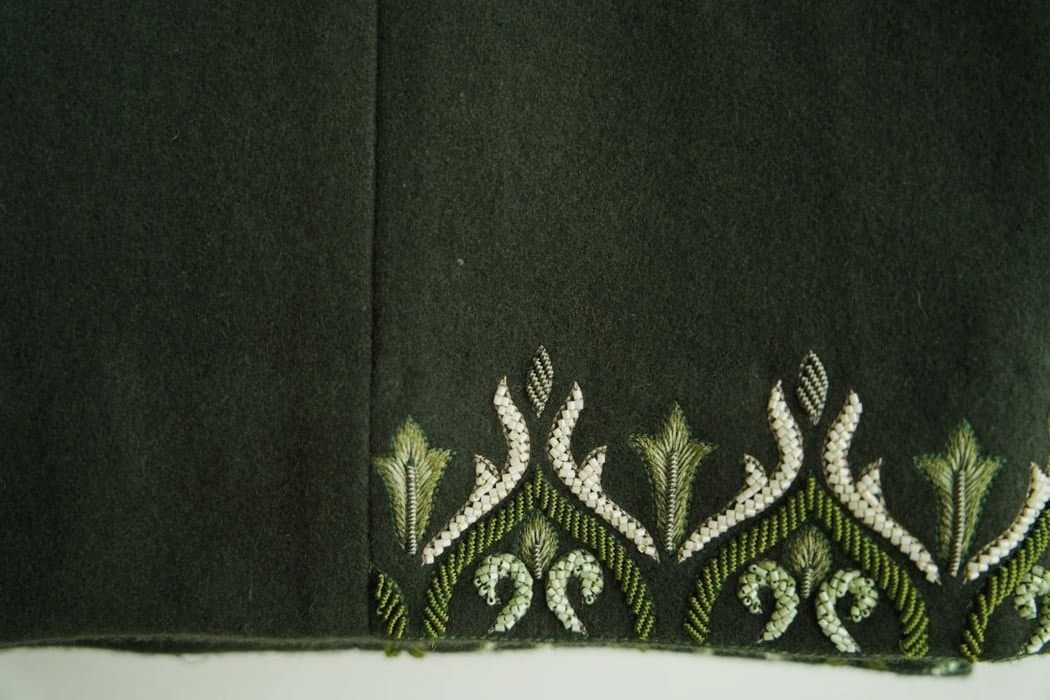
Pakistan holds thirteen embroidery traditions, each rooted in its own district. The house works with all of them.
- 01
Ajrak
SindhResist-printed and indigo-dyed cotton, worked in sixteen stages with madder and indigo. The house uses it for linings, scarves and shirting.
- 02
Phulkari
PunjabDarned silk floss worked from the reverse so the face reads as solid satin. Geometric, dense, and the fastest way to make a whole panel glow.
- 03
Zardozi
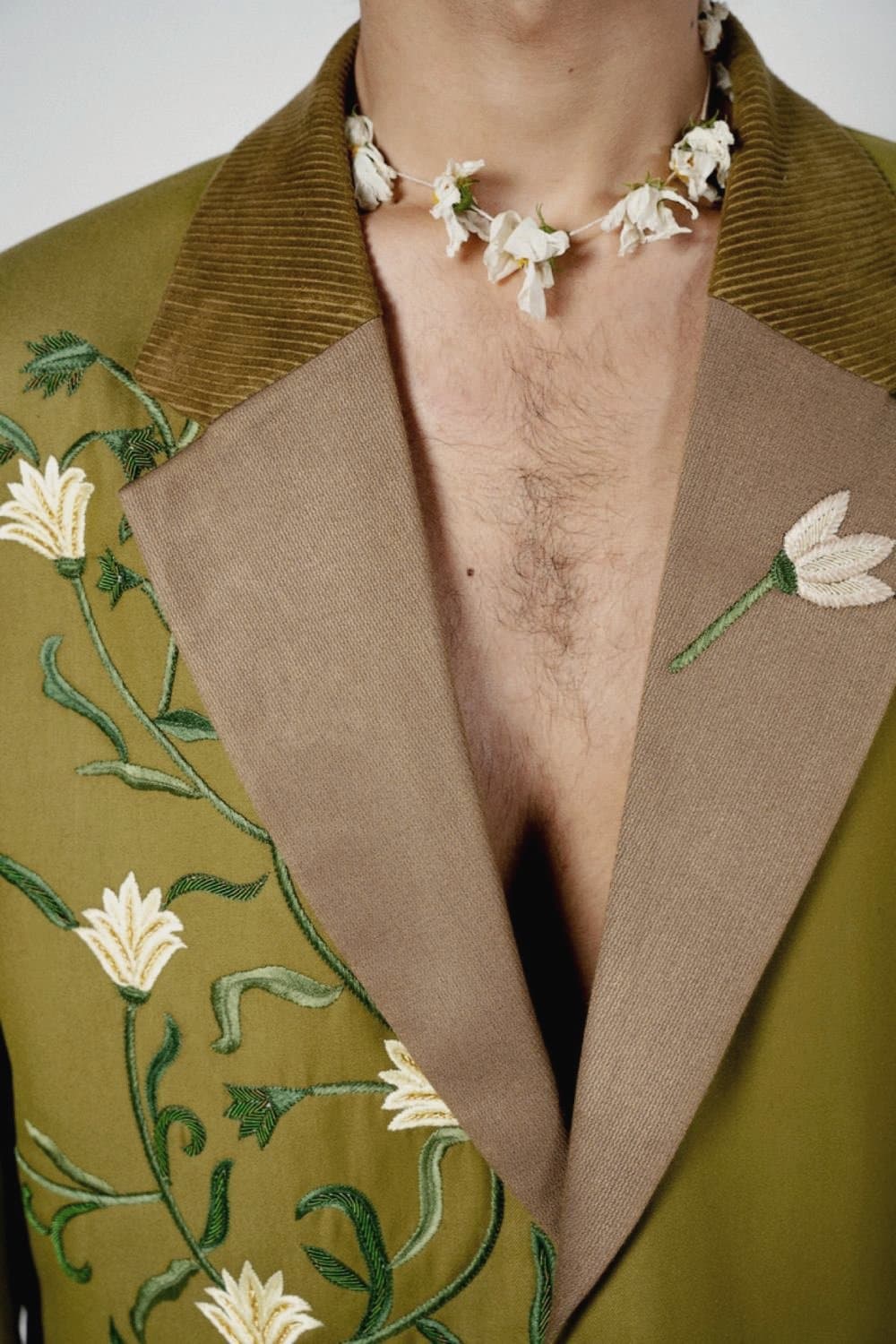
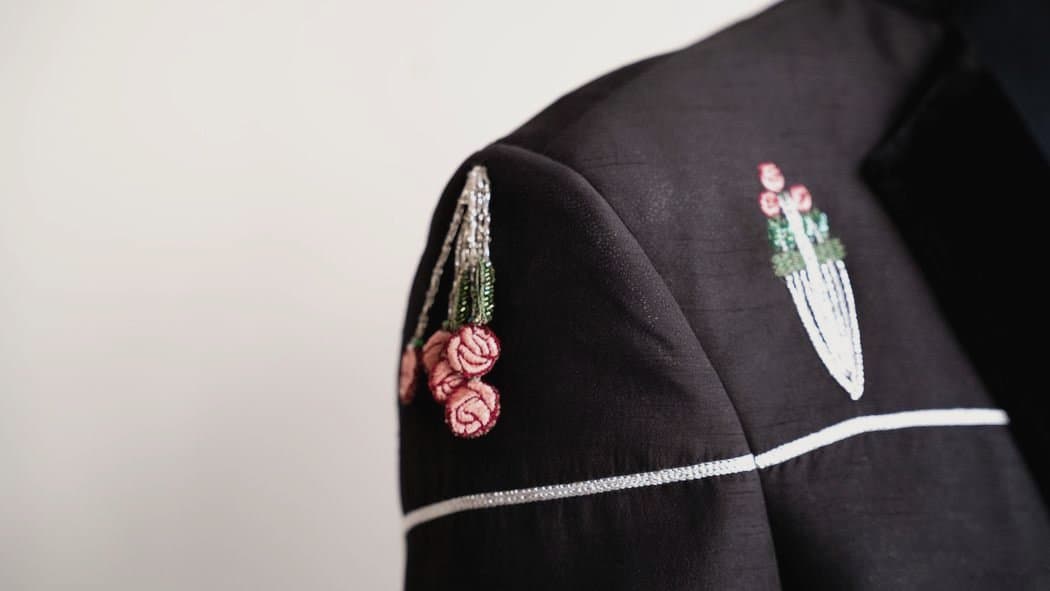
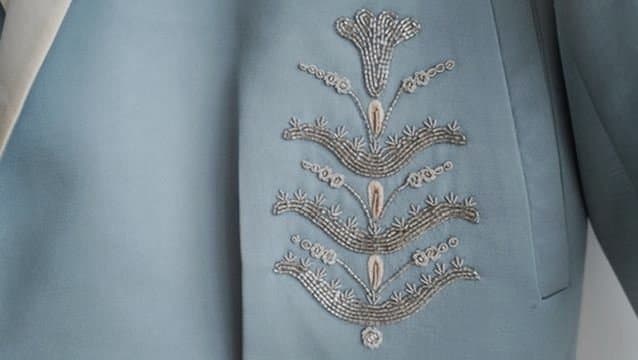
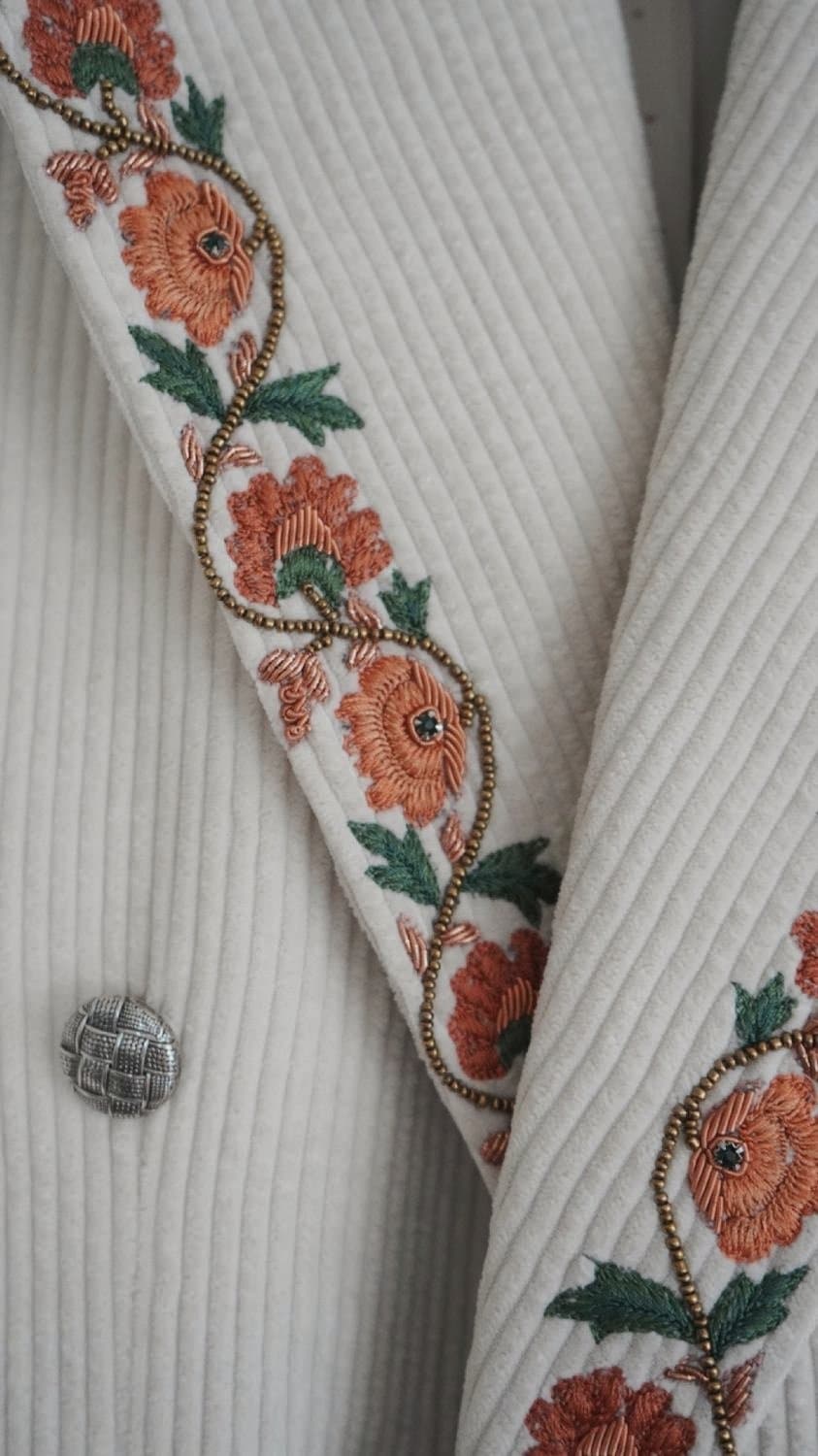
LahoreFlattened metal wire couched onto a frame. The technique behind ceremonial dress across the region, and the backbone of our hand couture.
- 04
Dandi taanka
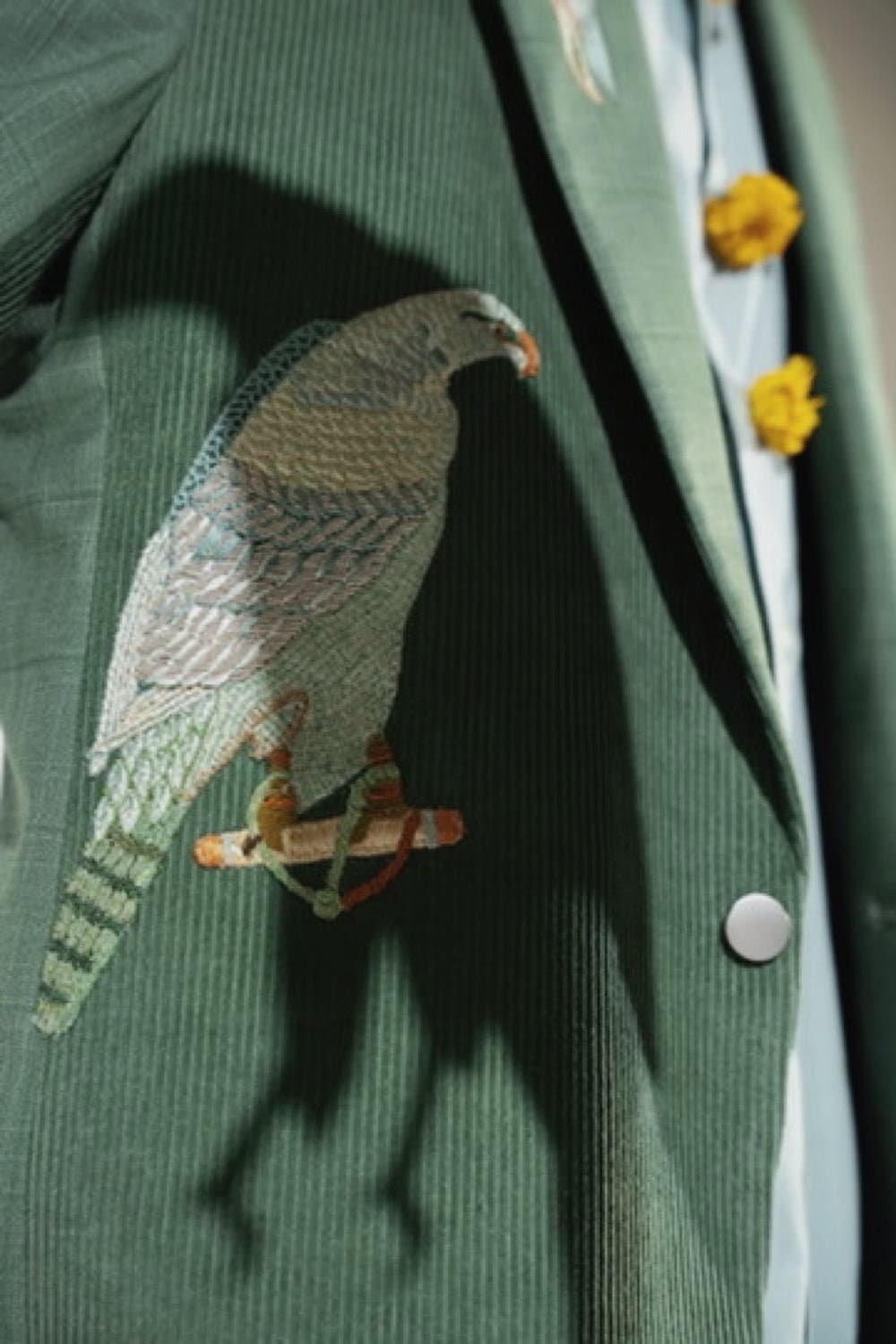
KashmirA fine, even stem stitch in silk floss that follows a drawn line exactly. Used for the figurative work: birds, beasts, faces.
- 05
Kamdani
PunjabFine metal thread pressed into light muslin and silk, producing points of light across the cloth. Almost weightless.
- 06
Balochi taanka
BalochistanInterlocking geometric bands in saturated floss, traditionally on the front of a shift. Unmistakable at a distance.
- 07
Sindhi taanka
TharparkarTight mirrored geometry with shisha work set into it. Kin to Kutch across the border, with its own grammar.
- 08
Zanjir taanka
PunjabChain stitch, worked with a hook. Our borders and vine work are almost all zanjir.
- 09
Ralli
Sindh & CholistanPieced and appliquéd quilt-making. A source of block geometry, and a technique we use for outerwear linings.
- 10
Chunri
SindhTie-resist dyeing in thousands of hand-tied points. Gives a ground that shifts colour as the cloth moves.
- 11
Shadow work
PunjabHerringbone worked on the reverse of sheer cloth so the colour sits behind the surface. Used on our lightest shirting.
- 12
Cross stitch
Sindh & BalochistanCounted thread on even-weave. The one stitch that translates a pixel grid directly.
- 13
Swati embroidery
SwatDense silk on dark ground in tight geometric blocks. A handful of workshops still hold it.
How the house works
Every stitch placed by hand.
01
Natural fibres
Silk, raw silk, linen, lawn, cotton, organic cotton, bamboo and wool. The house works in what grows, and is taking synthetics out of the line wherever a natural equivalent exists.
02
Paid above the rate
Karigars are paid well above the going Lahore rate and sit on our own payroll rather than a contractor's.
03
Named on the label
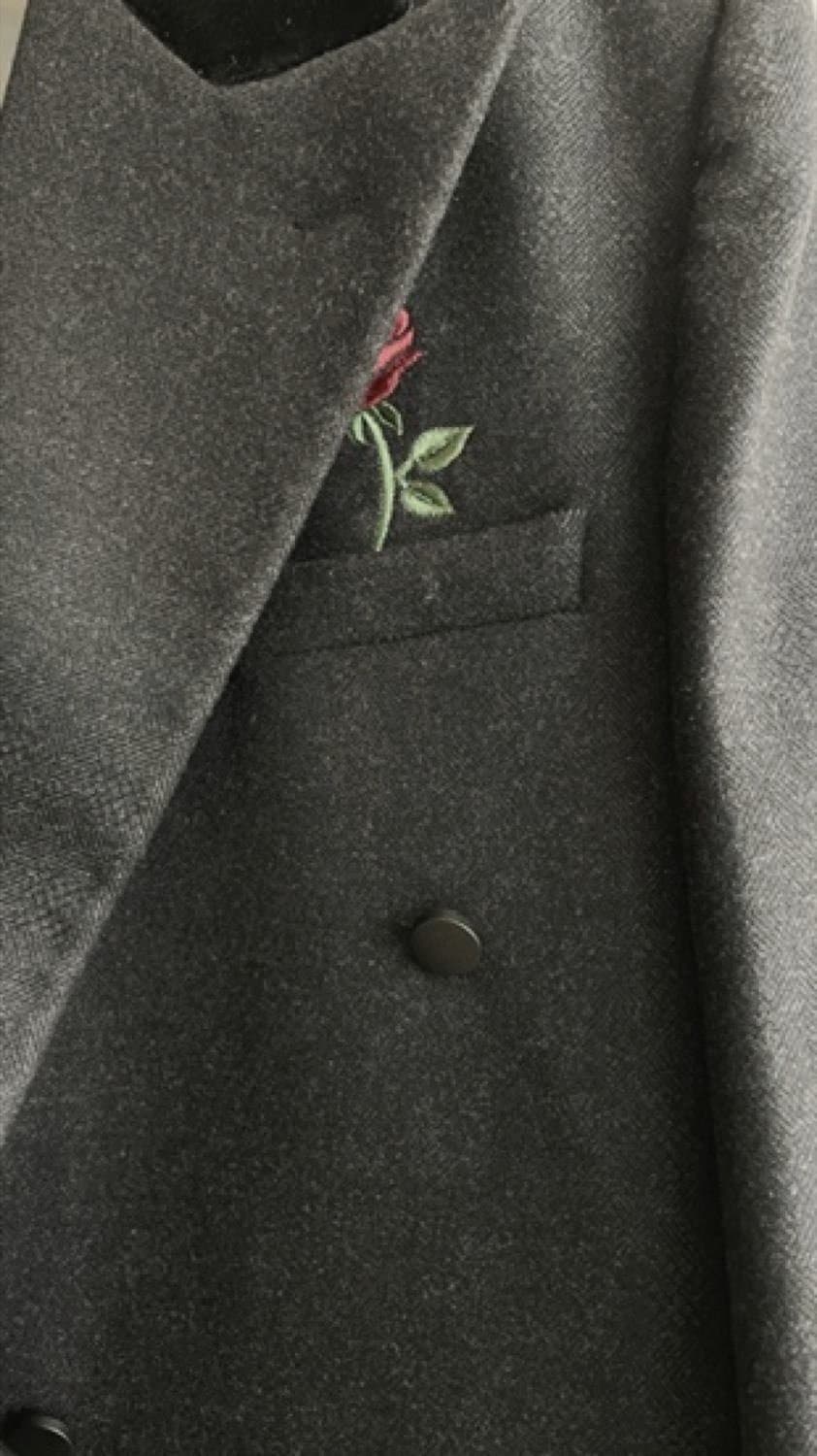
Every piece carries the craft name and the district it was worked in, beside the manuscript and the folio. A buyer can trace the coat back to a workshop and to a page.
The source
Every garment carries a source.
- 01A plate, chosen from the archive
- 02Drawn out as a stitch file
- 03Worked onto cloth by hand
The archive is Source Library: some 41,800 texts across four thousand years, catalogued and translated, with much of it from the Embassy of the Free Mind in Amsterdam. The manuscript is named on the label.
What goes back
The house pays its sources.
Just under half the catalogue still waits for a translation, and each embroidery tradition rests with a handful of workshops.
3%
To the archive
Of gross profit, for translation at Source Library.
2%
To the craftsmen
Of gross profit, for apprenticeships, tools and off-season work.
The clothes pay to translate the book.
Commission a piece